Showing posts with label war. Show all posts

3 November 2011

Thimble 101 - Life is Beautiful

......
The wonderful voice of musician and peace promoter, Noa.


Movie clips from "Life Is Beautiful"

Smile, without a reason why
Love, as if you were a child
Smile, no matter what they tell you
Don't listen to a word they say
'Cause life is beautiful that way

Tears, a tidal-wave of tears
Light that slowly disappears
Wait, before you close the curtain
There's still another game to play
And life is beautiful that way

Here, in his eyes forever more
I will always be as close as you remember from before.
Now, that you're out there on your own
Remember, what is real and what we dream is love alone.

Keep the laughter in your eyes
Soon, your long awaited prize
Well forget about our sorrow
And think about a brighter day
'Cause life is beautiful that way.


...
...

1 November 2011

Thimble 99 - For the Little Angels

...

...
Today is All Saint's Day - a day created by the Catholic church in which to remember all the early Christian martyrs. In Mexico it's also known as Día de los Inocentes ("Day of the Innocents") or Día de los Angelitos ("Day of the Little Angels"). Toys and gifts are left on the graves of dead children.

A good day to remember the little lost angels of war...


...
...

31 October 2011

Thimble 98 - The Dickin Medal

...


Awarded for Conspicuous gallantry
or devotion to duty
while serving in military conflict.

The PDSA Dickin Medal is recognised as the animals’ Victoria Cross.

It is awarded to animals displaying conspicuous gallantry or devotion to duty while serving or associated with any branch of the Armed Forces or Civil Defence Units. The Dickin Medal was instituted in 1943 by Maria Dickin, founder of the People's Dispensary for Sick Animals (PDSA), a British veterinary charity.

The medal was awarded 54 times during the Second World War, to:

32 pigeons
18 dogs
3 horses
and 1 cat


Rip
awarded the Dickin Medal in 1945
for locating air raid victims of The Blitz

Some of the more recent recipients:
2000 - Gander, a Newfoundland who saved infantrymen during the Battle of Lye Mun.
Sept 11 - two Guide dogs, Salty and Roselle, who led their blind humans to safety and Search-and -Rescue dog, Apollo.


Image from The Bureau of Educational and Cultural Affairs (ECA)
of the U.S. State Department and the Museum of the City of New York
of the World Trade Center attacks. Photographer: Joel Meyerowitz.

You can find a full list of all medal recipients here on the PDSA website.

29 October 2011

Thimble 96 - The Unknown Soldier

...

photo of an unknown soldier.

The Tomb Of The Unknown Soldier

A young man left his life one day,
To fight a war yet far away,
Fighting to let peace be known,
He thought one day
he would come home...

A service to remember them,
Who came before,
the brave young men,
A cannon booms,
a bugle sounds,
The tomb of those
whose life it crowns.

We remember with
a Tomb of Stone,
For the soldiers still unknown,
All those who fought
and died before,
And those who'll
fight in future wars.

Through many wars,
o'er many years,
Men and women looked
past their fears,
This tomb remembers
all of them,

by Jennifer McKay..

28 October 2011

Thimble 95 - I Wish...

...
Music, "Free" by the Lighthouse Family,
thoughful video by Roger.


I wish I could share
All the love that's in my heart
Remove all the bars that keep us apart
And I wish you could know how feels to be me
Then you'd see and agree that every man should be free

Say 'em loud say 'em clear
For the whole wide world to hear


...

21 October 2011

Thimble 88 - On the Peace Train!

...
My very first Blogblast globe from 2008, but this time with a very special video.
Please take the time to watch this lovely musical message to the end. :-)


...

17 October 2011

Thimble 84 - The Glory of War

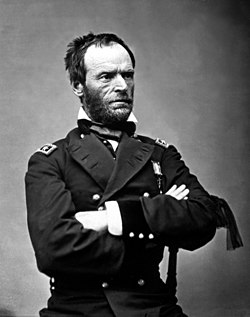
"I am tired and sick of war. Its glory is all moonshine. It is only those who have neither fired a shot nor heard the shrieks and groans of the wounded who cry aloud for blood, for vengeance, for desolation.

There is many a boy here today who looks on war as all glory, but, boys, it is all hell."

General William Tecumseh Sherman
Union Army
American Civil War (1861–65)


...

14 October 2011

Thimble 81 - An Unlikely Angel

...

An incredible story about an ordinary-extraordinary woman..


Irena Sendler (née Krzyżanowska)
15 February 1910 – 12 May 2008
Nominated twice for the Nobel Peace Prize


The wings of angels
are often found on the backs of the least likely people.


Eric Honeycutt
...

13 October 2011

Thimble 80 - 1,000 Paper Cranes

...
In Japan the Crane has always been a symbol of good luck, but one little girl changed it into a symbol of Peace for Japan.

This is her story...

Sadako and the Peace Crane

quoted from bbb.co.uk
'... on the 6 August, 1945, at 8.15am, Japanese Standard Time. An atomic bomb was dropped on the city of Hiroshima. The atomic bomb exploded 564 metres (1,850 feet) above the ground. Nearly all the buildings within 2.4 km (1.5 miles) were flattened. About 80,000 people died instantly from the blast. Another 70,000 died within a year, from injuries and from the fallout of nuclear radiation in the area surrounding the bomb's detonation.

The deaths did not stop there. Around 200,000 people have died because of this bomb alone. Many died because of illnesses brought about from the high levels of nuclear radiation to which they were exposed from living in and around Hiroshima.

One young Japanese girl named Sadako Sasaki was born in 1943. She was only two years old when the bomb was dropped on Hiroshima. Although she was too young to remember the war, every year she took part in the Peace Celebrations in Hiroshima because her grandmother died during the war. As Sadako grew up, she was strong, courageous and athletic. In 1955, she was preparing for a big race when she became dizzy and fell down. She was diagnosed with leukaemia, a cancer caused by radiation fallout, the 'atom bomb disease'. She was only 11 years old.

The illness changed Sadako's life. She was unhappy because she could not go to school, go out running or do the activities she had so enjoyed. However, she knew that some people recover from leukaemia so she never gave up hope.

One day her best friend Chizuko came to visit her and she told Sadako a story to cheer her up. The story was about a bird, a crane which was supposed to live for 1,000 years.

In Japan the crane is known as 'the bird of happiness' and is often referred to as 'Honourable Lord Crane'.

...the crane's reputation for long life and prosperity became a symbol of good health, and origami cranes became a popular gift for those who were ill. The story said that anyone who was ill should make 1,000 paper cranes and the gods would grant them a wish.

Sadako hoped that the gods would grant her wish to get well so that she could run again. Her friend, Chizuko showed her how to make a crane using origami, the ancient Japanese art of paper folding, and Sadako set to work.

All her visitors brought brightly coloured pieces of paper for her to make the cranes and Sadako's brother hung the finished ones from the ceiling of her room in the hospital.

Sadly, Sadako only managed to complete 644 paper cranes before dying on the 25 October, 1955, at the age of 12. The remaining 356 cranes were folded by her school friends so that she could be buried with 1,000 paper cranes.

Sadako had not given up, she continued to make paper cranes until she died. Sadako's friends were inspired by her courage and determination. They collected the letters that she had written and published them in a book called Kokeshi. Young people all over Japan were touched by her story and raised money to build a monument to her and all of the children killed by the atom bomb.

In 1958 the memorial was unveiled. It is a statue of Sadako holding a golden crane and is in the Hiroshima Peace Park, in Hiroshima, Japan.


Robert Atendido, took this picture in April of 2003.
It shows the structures that were built to protect the paper cranes from the elements.

The statue is engraved at the bottom with the wish the children made:


This is our cry, This is our prayer, Peace in the world.

Every year on Peace Day people from all over the world fold paper cranes and send them to Sadako's statue in Hiroshima.'


You can find more survivors' stories, and tapes, here at testimony_of_hibakusha.

"I will write 'peace' on your wings and you will fly all over the world"

Sadako Sasaki
...

10 October 2011

Thimble 77 - The Sisters Buried At Lemnos

..
My "thimble" for today day is a poem written to honour three Canadian sisters who died in WWI. They represent the often unremembered heroes of war - the nurses and medics.

This poem was written by Vera Mary Brittain, a British writer and feminist who also became a pacifist after her experiences as a V.A.D. nurse. Her fiancé and her only brother were both killed during WWI.


'This item is from The First World War Poetry Digital Archive,
University of Oxford (www.oucs.ox.ac.uk/ww1lit); © [Copyright notice]'


Vera wrote this poem in 1916, after she saw the graves of three Canadian sisters who had died nursing at the camp hospital at Mudros Bay, Lemnos.

THE SISTERS BURIED AT LEMNOS

O Golden Isle set in the deep blue Ocean,
With purple shadows flitting o'er thy crest,
I kneel to thee in reverent devotion
Of some who on thy bosom lie at rest!

Seldom they enter into song or story;
Poets praise the soldier's might and deeds of War,
But few exalt the Sisters, and the glory
Of women dead beneath a distant star.

No armies threatened in that lonely station,
They fought not fire or steel or ruthless foe,
But heat and hunger, sickness and privation,
And Winter's deathly chill and blinding snow.

Till mortal frailty could endure no longer
Disease's ravages and climate's power,
In body weak, but spirit ever stronger,
Courageously they stayed to meet their hour.

No blazing tribute through the wide world flying,
No rich reward of sacrifice they craved,
The only meed of their victorious dying
Lives in the heart of humble men they saved.

Who when in light the Final Dawn is breaking,
Still faithfull, though the world's regard may cease,
Will honour, splendid in triumphant waking,
The souls of women, lonely here at peace.

O golden Isle with purple shadows falling
Across thy rocky shore and sapphire sea,
I shall not picture these without recalling
The sisters sleeping on the heart of thee!


VERA BRITTAIN

...

4 October 2011

Thimble 71 - the Tiger Tragedy

...
Do you recognise this war memorial? It commemorates the deaths of over 700 servicemen, during WWII - including 441 United States Army and 197 United States Navy personnel.


I'll give you a few hints:

This monument was only made possible by the passionate dedication of a former British policeman who literally stumbled onto the story on a sea shore.
The submerged tank was finally raised from the sea in 1984 and made into a monument, with a plaque, provided by local residents and local authorities.

Here's that plaque...


Both photos courtesy of Wikipedia

Slapton Beach was part of an area of Devon completely evacuated (farms and villages) so that Allied troups could use the area to prepare for D-Day. The code names for this extremely secret battle rehearsal were Exercise Tiger or Operation Tiger.

On April 28 April a flotilla of eight LSTs (landing ship, tank) was busy transporting troops and equipment to Slapton Sands when disaster happened. Being a covert operation led to a breakdown in communications - no-one warned them of the German Torpedo boats in the area. The BBC history archive says:

In the early hours of 28 April 1944, a convoy of eight American landing ship tanks (LSTs) were carrying out a D-Day dress rehearsal off the South Devon coast when they were ambushed by German E-boats.

Two of the LSTs were sunk in the attack off Slapton Sands, killing 749 US servicemen - a higher death toll than at the initial D-Day landings which were to take place on Utah Beach, Normandy, two months later.


Orders of strictest secrecy were imposed. They covered everyone, even the doctors and nurses who treated the survivors. D-Day became a real event, the war ended and the tragedy of Slapton Sands became just one of many.

Then, one day in 1968, a former policeman who had moved to the area was walking on the beach when he started to find fragments of war; buttons and bullets. He started asking questions and was horrified at the story. And even more horrified that while the Americans had raised a monument to honour the people of Slapton, who had given up their homes for the war effort, there was no memorial to the soldiers who had died here.

His name was Kenneth Small and you can read the whole story of his struggles to get a memorial for the Operation Tiger Tragedy, plus photos on the secondworldwar.org.uk website.
...

2 October 2011

Thimble 69 - for Gandhi's Birthday

...
When I despair,
I remember that all through history
the ways of truth and love have always won.
There have been tyrants, and murderers,
and for a time they can seem invincible,
but in the end they always fall.

Think of it - always.


Mahatma Gandhi

30 September 2011

Thimble 67 - The Soldier's Kiss

..

The Soldier's Kiss

by War Poet Henry Chappell (1874 -1937)

Only a dying horse! Pull off the gear,
And slip the needless bit from frothing jaws,
Drag it aside there, leave the roadway clear
The battery thunders on with scarce a pause.

Prone by the shell-swept highway there it lies
With quivering limbs as fast the life tide fails,
Dark films are closing o'er the faithful eyes
That mutely plead for aid where none avails.

Onward the battery roll, but one there speeds
Heedless of comrade's voice or bursting shell,
Back to the wounded friend who lonely bleeds
Beside the stony highway where it fell.

Only a dying horse! He swiftly kneels,
Lifts the limp head and hears the shivering sigh
Kisses his friend. While down his cheek there steals
Sweet pity's tear; ‘Goodbye Old Man, Goodbye'

No honours wait him, Medal, Badge or Star,
Though scarce could war a kindlier deed unfold;
He bears within his breast, more precious far
Beyond the gift of Kings, a heart of gold.


...
...

26 September 2011

Thimble 63 - Peace and War

...
There is one Peace Symbol that has, most tragically, taken on a symbolism of an entirely different kind. In fact, it has even been banned in several countries around the world.

Originally it was a symbol for harmony, Peace and good luck. In China it was sometimes used as a symbol for the sun. The ancient Greeks used it to decorate their pottery and the Hindus linked it, in various forms, to their gods. It has been used in funeral rites as a blessing and as a good luck symbol all across Asia. This bottom photo shows it used on a Temple in South Korea.


The ancient Sansksrit name for this symbol, translating as "all is well" is... svastika.

all is well

How terribly tragic that such a beautiful blessing, worked into a pleasing geometric symbol, could now be something we draw back from in disgust when we see it in connection with Hitler and the Nazis. For millenia it wished us all well until one century of war and violence changed all that.

Maybe one day, when all is well, we'll set it free to be the simple symbol of Peace it was first created to be.
...

17 September 2011

Thimble 54 - Lachto Drom

..

The girl in this photo was nine years old when she stared out at the world from a train. Two months later, in 1944, she would be gassed at Auschwitz. She's only one death in millions, a face without a name, but her haunting expression, caught on film, would become famous as an icon for all the Jewish children who died in the holocaust... except she wasn't Jewish. She was Romani - a Gypsy.

She would have to wait until 1994 for a Dutch Journalist, Aad Wagenaar, to identify her. A survivor from that terrible journey remembered her name; her mother had called her back from looking out the train. Her name was Settela Steinbach and she was born in the Netherlands.
'Latcho Drom is an ancient expression in the Gypsy language that means "Bon Voyage", "Safe Journey". It's been used in time immemorial as an expression of good wishes by this migrant people. When a Gypsy family would leave from one location, in route to another, in search of a better living, those staying behind would simply say Latcho Drom, "have a safe journey"
Quote From here
Lachta Drom... Safe Journey.


Settela's train trip was so completely the opposite of safe that it is mind-boggling. She was travelling on a journey most of us couldn't begin to, or want to, imagine. Many of the Romani children who went Auschwitz-Birkenau were used for the medical experiments of Dr. Josef Mengele. But why did it take so long for anyone to realise she was Roma and not Jewish?

'It was assumed she was Jewish, as for many years there was little attention paid to the genocide of the 400,000 Roma that were murdered by the Germans ...'

http://www.jewishvirtuallibrary.org/jsource/Holocaust/ChildHolo.html

"Little attention paid to the genocide..."

Such a simple phrase for such an overwhelming and unbearable truth.

The Nazis' official title for it was, "Combating the Gypsy Nuisance" and it almost seems as if the world thought remembering those dead was a nuisance as well. It took decades of campaigning before an official day dedicated to those who died was declared in 2009. August 2 was chosen for International Roma Holocaust Day because it was on the night of August 2-3 that 2,897 Sinti and Romani men, women, and children were killed in the gas chambers of Auschwitz-Birkenau when the camp was liquidated. No more Lachto Drom, no more safe journeys...


O the black bird went into my heart and stole it.
Here I live in auschtwitz
here in auschtwitz I'm hungry,
there isn't a piece of bread to eat.
there isn't nothing to eat here
its all my bad luck.
at one time I had my home.
I'm so hungry I could kill.
oh oh Jesus oh oh

Sung by Romani holocaust survivor Margita Makulová.

Movie clip from the docu-movie Lachto Drom


How do you travel on from such appalling memories? It is not enough to move forward from guilt. It is not enough to move forward in anger. We need to move forward because we have learnt from the past, recognising the flaws of humanity, and are ready to create a better future. Guilt is as poisonous as anger, they may spur you into starting a journey, but to travel with them for a lifetime destroys all joy and pleasure.

Embrace the horror and anger, bitterness and grief. Don't turn away from accepting your part in any tragedy, no matter how bad guilt may make you feel. Accept your part in the world's past, but don't stay there - you have to travel on! There's no point in learning lessons if you don't use them. Wish each other Lachto Drom, good luck, safe journeys, and then make that your intention - safety and goodness for everyone.

* With many thanks to Morgan,
who blogs with an amazing passion on
Lolo Diklo,
for helping me with links and photo.

....
...

16 September 2011

Thimble 53 - The Red Poppy

..
In Ancient times the poppy was the symbol of the Greek god, Morpheus - the god of dreams, probably because opiate drugs are derived from some species of poppy. It's also a flower seen in late summer and Autumn, which leads it to being linked with the year ending and harvest.

With the dawn of Christianity the poppy moved from being a symbol of dreams and slumber to being a symbol of resting peacefully in death. Poppies grow best in soil that has been dug up and turned over, as in harvest...


...or in war or around graves.

In 1915 a young Canadian doctor, named John McCrae, was stationed in France during the war. He saw the poppies growing on battlefields of Flanders and was moved to write the beautiful poem "In Flanders Fields" ...but it was actually an American woman, named Moira Michael, who made the first pledge to wear a red poppy in honour of those who had died in the war. Her pledge is in her poem "We Shall Keep the Faith", written in 1918.


Today the red poppy is worn (usually on Nov 11 - Remembrance Day/Armistice Day) to commemorate all servicemen and women who have been killed in wars since 1914....
...


"Only Remembered" (Bonar/Sankey/Tams Voice Publishing) is used by permission and is taken from the album "Private Peaceful The Concert" (No Masters NMCD24, http://www.nomasters.co.uk ) by Coope Boyes & Simpson (http://www.coopeboyesandsimpson.co.uk )..

10 September 2011

Thimble 47 - Wilde War

...
As long as war is regarded as wicked,
it will always have its fascination.

When it is looked upon as vulgar,
it will cease to be popular.


Oscar Wilde

...

9 September 2011

Thimble 46 - Teddy Bear Day

...
Today is Teddy Bear Day and this is the story of a very special teddy bear.

Teddy is a stuffed bear that belonged to Aileen Rogers when she was a girl growing up in Quebec.

When Aileen’s father, Lawrence Browning Rogers, went to fight for Canada in World War I, Teddy was shipped overseas to help protect him. In a letter from September 25, 1916, Lawrence wrote:

Tell Aileen I still have the Teddy Bear and will try to hang on to it for her, it is dirty and his hind legs are kind of loose but he is still with me.

Teddy was discovered, along with Lawrence’s wedding ring and letters from his family, after he died at Passchendaele.

In the final years of her life, Aileen often spoke about Teddy and about her father’s departure for the war. Aileen’s niece, Roberta Rogers Innes, unearthed Teddy from an old family briefcase in 2002. The briefcase also included more than 200 letters that Lawrence had written to May during the war.

In 2003 Roberta submitted Teddy and some of the letters to The Memory Project, an initiative of The Dominion Institute, the Globe and Mail and the government of France. Those entities launched a national call for letters and photographs from the front lines of the First World War to commemorate the 90th anniversary of the end of the war.

Teddy was among the artifacts selected.


The Rogers family donated Teddy to the Canadian War Museum in Ottawa, where the little bear now has a spot in a glass case as part of the World War I exhibit.

There is a Children's book about Teddy's story, "A Bear in War"
You can find out more about the book and the Rogers family here.
...

Can one everyday person really make a difference and change the world? Isn't that a bit like trying to empty the ocean with a thimble?

Maybe... but what if you got everyone to help you?
What if we bailed with a billion thimbles?

These are my Thimblefuls for Peace... I hope they make you think.